For many drivers, transportation apps like Uber are now a viable form of permanent or additional employment. In 2026, the transportation market continues to grow – demand for transportation services is growing, and individuals and companies are seeking partners who will allow them to operate legally, efficiently, and without unnecessary formalities. In such a dynamic environment, it's not just about choosing an app, but above all – choosing the right partner who will handle formalities on behalf of the driver, facilitate start-up, settle payments, and provide support. A good partner guarantees peace of mind, security, and fair conditions. A bad one can mean lost money, paperwork issues, or legal problems.
Therefore, the decision about who to sign a contract with is crucial. It determines whether the work will be comfortable and profitable, or whether it will become a source of stress and uncertainty. In 2026, with increased competition and growing regulatory requirements, it's worth choosing a partner carefully – checking what they offer, what their reviews are, whether they meet standards, and whether their model of cooperation in practice aligns with your expectations.
Basic criteria – legality, licensing and compliance
The first step when choosing an Uber partner is ensuring they are legally operating. A reliable partner should have a registered company, a valid transport license, or the appropriate authorizations required to operate taxi apps. According to Uber, if the driver is not self-employed, the partner (fleet partner) must be licensed and handle the paperwork.
Another important consideration is whether the partner offers a full package of formalities: handling all necessary tests, documents, verification, and registration. In practice, this means the driver doesn't have to worry about dealing with authorities – the partner handles everything, and the driver can immediately focus on driving. This is a huge advantage, especially for those just starting out with Uber.
In 2026, it is worth taking a moment to check whether the partner has current authorizations and whether they declare compliance with the application and legal requirements – this is the basis for safe and stable cooperation.
Financial conditions and transparency of settlements
A good Uber partner also offers transparent billing terms. It's worth paying attention to several key aspects: the amount of commission or fees, the frequency of payouts, the transparency of billing, and any additional costs (e.g., insurance, fleet cost sharing, service costs).
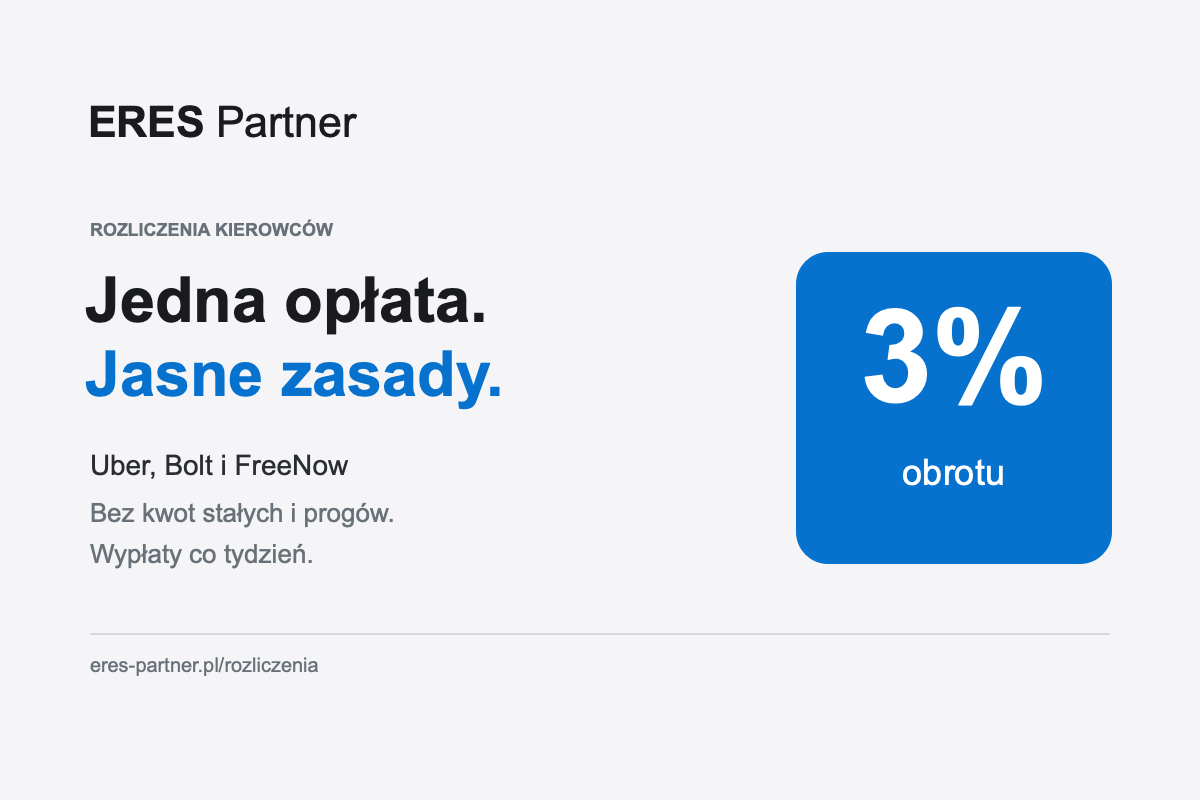
For example, ERES Partner offers a commission-free model where you can drive your own car , or earn up to 55% of your turnover with a fleet . This is a very competitive proposition compared to many other partners.
Transparency in billing is also important – good companies allow you to view your balance sheet, provide exchange rate reports, have clear payout policies (e.g., weekly), and have no hidden fees. This allows you to realistically assess how much you'll earn and whether the partnership is worthwhile.
In 2026, as vehicle maintenance, fuel, and insurance costs rise, fair and transparent settlement terms are especially important. When choosing a partner, check the real net rates, payment frequency, and whether everything is clearly spelled out in the contract.
Formal and operational support – what should a partner provide?
For many drivers, the biggest advantage of working with a partner is that the company handles virtually all the formalities —from obtaining a license, through inspections, to app activation. A good partner offers comprehensive support so you don't have to worry about it.
This operational support can also include assistance with insurance, vehicle maintenance, app account management, and ongoing care—anything that would be cumbersome or time-consuming for the driver. In 2026, with growing regulatory requirements and increased competition, such assistance is a real advantage.
When choosing a partner, it is worth checking whether they offer a full range of support – whether they will arrange the license, documents, formalities, whether they will help with the adaptation of a new driver, and whether they have an efficient billing and support system on the company side.
Flexibility of cooperation and the possibility of choosing a working model
One of the most important benefits of working with a partner is flexibility – the ability to tailor the form of cooperation to your needs. A good partner offers a choice of different models: you can drive your own car without commission, choose a fleet, or agree on other terms. This is especially important in 2026, as more and more people are looking for part-time work, while studying, or pursuing other pursuits. ERES Partner offers precisely this flexibility.
The ability to work from your own vehicle or fleet, flexible hours, and freedom of choice – these are factors that can determine whether working with a partner will be comfortable. It's also worth checking whether the partner offers a quick start (e.g., 24-hour activation), which can be important for getting started quickly.
If you value flexibility and independence, pay attention to whether your potential partner realistically guarantees it.
Opinions and experiences of current drivers – what to pay attention to
No offer can replace the real-world experiences of drivers who already work with a partner. Opinions, reviews, and feedback on social media or forums are a valuable source of information. It's worth seeking out the opinions of those who have been driving for a while – they will best highlight the strengths and weaknesses of the partnership.
In the case of ERES Partner, the company declares that it cooperates with over 12,000 drivers , and many of them recommend the company due to its conditions, transparency of settlements and formal support.
When reviewing reviews, pay attention to whether drivers complain about late payments, unclear billing, lack of support when problems arise, or hidden fees. If such signs appear regularly, it's best to look for a different partner.
What to watch out for – warning signs when choosing a partner
When searching for an Uber partner, it's worth keeping your eyes peeled. There are signs that may indicate that working with a given company may be risky. What to look for:
- Lack of a clear contract, hidden fees or very complicated billing terms.
- Long waiting time for activation or lack of licenses/permissions.
- Delays in payouts or lack of transparency in commissions.
- Negative opinions from drivers – on forums, social media, groups.
- Lack of operational support – if the company does not help with formalities or does not respond to reports.
In 2026, when competition is fierce, honesty, transparency and a partnership approach are key – when choosing a partner, pay attention to real experiences, opinions and conditions, not just marketing promises.
Summary – Key Tips for Choosing an Uber Partner in 2026
Choosing the right Uber partner is one of the most important decisions if you want to work legally, safely, and profitably. Before signing a contract, it's worth considering the partner's legality and licensing, clear financial terms and transparent billing, formal and operational support, flexibility of cooperation and model tailored to your needs, reviews from other drivers and real-world experiences, and warning signs—hidden fees, lack of support, and delays.
What will you learn from this article?
1. What to look for when choosing an Uber partner in 2026?
Above all, it's about legality (licenses, regulatory compliance), transparent financial terms , a clear contract, and real formal support. A good partner handles the paperwork, billing, and app activation, allowing the driver to focus solely on driving.
2. What financial terms should a good Uber partner offer?
The partner should provide transparent billing , no hidden fees, and regular payouts (e.g., weekly). It's worth checking the commission amount or percentage of turnover, the option to drive your own car without commission, and clear rules regarding fleet, insurance, and service costs.
3. How to recognize an Uber partner you should not work with?
Warning signs include a lack of a clear contract, unclear billing, delayed payments, negative driver reviews, and a lack of operational support. If the company avoids specifics or changes terms during the collaboration, it's worth looking for a different partner.